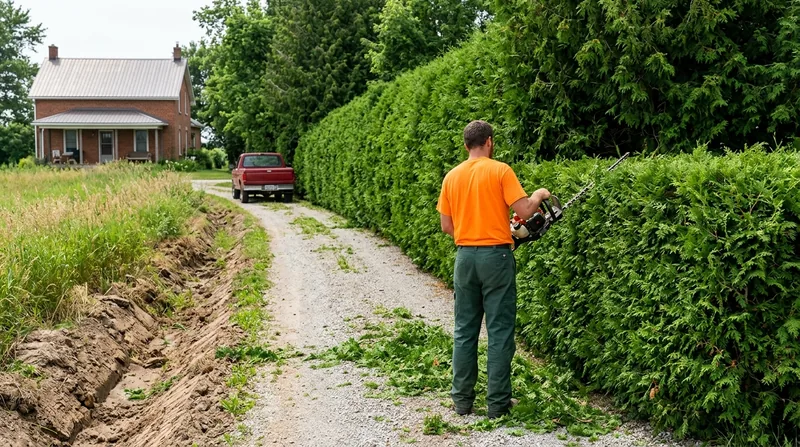




Hedge and cedar hedge trimming in Windsor keeps property lines neat, maintains sightlines, and protects the health of your hedgerow. Cedar, yew, privet and mixed hedges are common across Windsor and the surrounding municipalities, often marking lot boundaries in post-war neighbourhoods and newer subdivisions. Over time, hedges grow leggy, dense at the top and bare at the base, or simply outgrow their space. Our crews cut them back to line with the sides tapered so light reaches the bottom, then clear all clippings the same day, including debris that falls on the neighbour's side. We are ISA Certified Arborists with over a decade of experience trimming hedges in Windsor, and we handle everything from routine maintenance to severe overgrowth.
Why hedge trimming matters in Windsor
Hedges define property, filter wind and noise, and provide wildlife shelter. But neglected hedges become overgrown, lose their shape, and can shade out neighbouring gardens or block sight lines at driveways. Cedar hedges in particular need regular attention: they respond well to trimming when done at the right time of year, but if left too long they become woody and difficult to restore. Trimming also prevents disease, removes dead wood, and keeps the hedge dense and attractive for decades.
- We assess the hedge species, current condition, and your goals before cutting.
- We taper the sides so sunlight reaches the base and the hedge stays full.
- We clear all clippings and debris the same day, leaving your property and the neighbour's clean.
- We respect property lines and work safely around fences, utilities and structures.
A well-maintained hedge improves curb appeal, increases privacy, and protects your investment in your home.
Local example: A 30-metre cedar hedge in Sandwich that had not been trimmed in five years was dense at the top and bare at the base. Our crew cut it back to shape, tapered the sides, and cleared the clippings in a single day. The hedge now receives light along its full height and will remain full and healthy for years with annual maintenance.
How we trim hedges in the Windsor area
Every hedge is different. A small privet hedge in a tight suburban backyard requires different equipment and technique than a mature cedar boundary hedge on a ravine lot. We start with a site visit to understand the hedge type, access, overhead hazards, and your goals. We then quote a price, confirm the timing, and schedule the work during the best season for that species.
- We inspect the hedge for disease, dead wood, and structural issues.
- We use hand shears, hedge trimmers and chainsaws as needed, depending on stem size and density.
- We cut the sides at a taper so the top is narrower than the base, allowing light to reach all levels.
- We haul clippings to our truck or chipping equipment and remove them from site.
- We rake and sweep the area, including the neighbour's side if clippings fell there.
The entire job is completed in one visit. You get a neat, healthy hedge and a clean property.
Real-world timing: Cedar hedge trimming is best done in late spring or summer when the plant is actively growing and will quickly fill in. If you trim in late fall or winter, growth is slow and the hedge may look thin until warm weather returns. We schedule most cedar work between June and August, and we can advise on the best window for your specific hedge during your free estimate.
Trimming methods for different hedge types
| Hedge type | Trimming approach | Best season |
|---|---|---|
| Cedar (Thuja) | Hand shears and hedge trimmers; taper the sides; avoid cutting into bare wood. | Late spring and summer |
| Yew | Shears for fine detail; yew tolerates hard pruning and recovers quickly. | Late spring through early fall |
| Privet | Hedge trimmers for a clean edge; privet responds to frequent light trimming. | Spring and summer, multiple passes |
| Mixed deciduous (maple, birch, hawthorn) | Chainsaws for thick stems; prune to shape while dormant; removes dead and crossing branches. | Late fall through late winter |
Each species has its own growth habit and recovery window. We choose the right tool and timing so your hedge looks good immediately and stays healthy long-term.
Permits and site considerations
Hedge trimming on your own property usually does not require a permit in Windsor or the surrounding municipalities. However, some municipalities have rules about tree removal or major landscape alteration, so we always confirm local requirements before starting work. If your hedge is near a property line or shared driveway, we ensure all clippings are cleared from the neighbour's side and that we respect any easements or utility corridors. We maintain safe approach distances around your private electrical service entrance, and if any branches touch the public distribution network operated by your local utility or Hydro One, we refer that portion to them rather than cut it ourselves.
Our crews are fully insured and carry liability coverage for all work in Windsor and the surrounding area. We document what we do and can provide proof of insurance if you need it for your records.
Seasonal timing for hedge work
The best time to trim your hedge depends on the species and what you are trying to achieve. Cedar and evergreen hedges respond best to trimming in late spring and summer, when they are actively growing and will quickly fill in bare spots. Deciduous hedges (maple, birch, hawthorn) are best pruned in late fall or winter while dormant, so you can see the branch structure and remove dead or crossing wood without damaging new growth. If your hedge is severely overgrown, we may need two seasons to restore it safely. We discuss the right timeline during your free estimate and schedule work to give you the best result.
For routine maintenance hedges that are already in good shape, annual or biennial trimming in the appropriate season keeps them neat and healthy. We can set up a regular schedule if that suits your property.
What to expect on the day of trimming
Our crew arrives with hand tools, hedge trimmers, chainsaws and a truck or chipping equipment. We start at one end of the hedge, work methodically along its length, and taper the sides as we go. We collect clippings in tarps or feed them into a chipper if we have brought one. Once the cutting is done, we rake and sweep the area thoroughly, including the neighbour's side if needed. The entire job is completed in a single visit, and we haul all debris away. You are left with a neat, shaped hedge and a clean property. For a free estimate and to discuss your hedge, call us at (855) 510-1827 or visit our contact page to request a quote.
Rose City Tree Trimming has been serving Windsor and the surrounding municipalities since 2014. Our ISA Certified Arborists know the local species, climate and terrain, and we take pride in clean, professional work. Whether you have a small ornamental hedge or a long cedar boundary that needs restoration, we have the equipment and expertise to get it right. Learn more about our other tree trimming services or visit our pricing page for a full list of what we offer.
Prices Hedge & Cedar Hedge Trimming in Windsor — Indicative pricing
| Service | Price | Details |
|---|---|---|
| Small hedge trimming (up to 10 metres) | From $150 | Routine maintenance of privet, yew or mixed hedges; includes clean-up |
| Medium cedar or hedge boundary (10 to 30 metres) | From $350 | Tapered shaping, full cleanup including neighbour's side |
| Large or severely overgrown hedge | From $600 | Major restoration, multiple visits if needed, wood chipping available |
| Hedge removal and grind stumps | On estimate | Complete removal plus stump grinding; call for site assessment |
| Travel and setup | Included | No extra charge in Windsor and the surrounding area |
| Free estimate | Complimentary | Call (855) 510-1827 or request online, response within 24 hours |
Indicative prices; free, personalized estimate within 24h at (226) 602-8703.