Understanding the Carolinian Forest of Windsor-Essex
The Windsor area occupies one of Canada's rarest and most ecologically significant forest areas. The Carolinian forest represents the northernmost extension of the temperate deciduous forests that dominate the southeastern United States, and Essex County contains the largest remaining tract of this ecosystem in the country. This distinction means that homeowners and land managers in Windsor have access to a palette of tree species that simply cannot survive reliably in other parts of Ontario.
The Carolinian classification refers to the flora and fauna characteristic of the Carolinas, and in Ontario, this forest type is restricted to a narrow band along the north shore of Lake Erie and the Detroit River. The growing zone here is warmer and more humid than the rest of the province, with longer frost-free periods and greater heat accumulation during the growing season. Understanding this advantage is crucial for anyone planning a landscape or managing existing woodland, because many beautiful and valuable species that fail elsewhere flourish here. The challenge, however, is knowing which species are truly suited to local soil, moisture and climatic conditions, and how to establish and maintain them properly.
Native Trees That Thrive in Windsor's Growing Zone
Several native species are ideally adapted to the Carolinian conditions of Essex County. The tulip tree (Liriodendron tulipifera), also called yellow poplar, is one of the most prized hardwoods in eastern North America and grows exceptionally well here. It reaches 30 to 60 metres in height and produces distinctive yellow-green flowers in spring, followed by striking autumn colour. The wood is valuable for timber, and the tree's straight grain and rapid growth make it a favourite among arborists and foresters. Tulip trees prefer deep, well-drained soil and full sun, and they establish quickly once planted.
The hackberry tree (Celtis occidentalis) is another Carolinian native that deserves more recognition. It is tough, drought-tolerant once established, and provides excellent food for wildlife. The tree is small to medium-sized, reaching 15 to 25 metres, and its finely textured foliage turns a warm yellow in autumn. Hackberry adapts to poor soils and variable moisture, making it an excellent choice for difficult sites. The Kentucky coffeetree (Gymnocladus dioicus) is a striking native that produces large, bipinnate leaves and distinctive flat seed pods. It is a slow to moderate grower, typically reaching 12 to 18 metres, and its open branching structure casts dappled shade ideal for understory plantings.
The sycamore tree, or American sycamore (Platanus occidentalis), is a large, fast-growing native that thrives in moist soils near streams and wetland margins. It can exceed 30 metres and is recognizable by its distinctive mottled white and grey bark that sheds in irregular patches. While beautiful and ecologically valuable, sycamore requires space and adequate moisture, and it is best suited to larger properties or naturalized areas rather than typical residential lots. All of these species support native insects, birds and mammals, and their establishment strengthens the local ecosystem.
Choosing the Right Tree for Your Property
Selecting a tree is not simply a matter of choosing a species that grows in the region. Soil type, drainage, available space, sun exposure and intended function all play critical roles in long-term success. Essex County soils are typically clay-based and can be poorly drained in low-lying areas, while elevated sites may be sandier and drier. Before planting, it is worth having your soil tested or consulting with a local arborist who understands the micro-conditions of your property. A tree that is perfectly suited to the Carolinian zone may still fail if it is planted in standing water or in compacted clay without amendment.
Space is another practical constraint. The tulip tree and sycamore are magnificent specimens but require room to develop their full form and canopy. Smaller properties may be better served by hackberry, Kentucky coffeetree or smaller understory natives such as redbud or serviceberry. Exposure matters too: a southern-facing slope with afternoon sun will support different species than a north-facing woodland edge. Once you have identified candidate species and confirmed they suit your site conditions, the next step is proper establishment. Young trees need consistent moisture during their first two to three growing seasons, and mulching, staking and occasional pruning help ensure vigorous development.
If you are uncertain about species selection or site assessment, our certified arborists at Rose City Tree Trimming can evaluate your property and recommend species tailored to your goals and constraints. We can also advise on Tree Trimming and Tree Pruning schedules to establish strong structure in young trees, which reduces the risk of failure and storm damage later on. Call us at (855) 510-1827 for a free estimate.
Planting and Establishment in Essex County Conditions
The success of a newly planted tree depends heavily on the quality of the planting hole and the care provided in the first years after installation. In clay-heavy soils typical of the Windsor area, the most common mistake is digging a planting hole that is too deep or that becomes a sump for water. Modern arboriculture recommends planting trees at or slightly above their original soil level, with the root collar (the flare where roots meet trunk) fully visible and not buried. The planting hole should be wide, typically two to three times the diameter of the root ball, to encourage lateral root spread into surrounding soil. Backfill should be native soil with minimal amendment, as heavily amended soil can create a barrier that roots are reluctant to cross.
Mulching is essential in the establishment phase. A 5 to 10 centimetre layer of wood chips spread in a circle around the base of the tree (but not touching the trunk) helps retain soil moisture, moderates soil temperature and suppresses competing weeds and grass. In the dry summers that occasionally occur in Essex County, consistent watering during the first two growing seasons is critical. Young trees should receive approximately 25 litres of water per week, either from rainfall or supplemental irrigation. Avoid fertilizing newly planted trees unless a soil test indicates a genuine deficiency, as excess nitrogen can promote soft growth susceptible to pest and disease pressure.
Structural pruning in the first few years pays enormous dividends. Removing competing leaders, crossing branches and weak branch angles helps establish a strong framework that will resist storm damage and wind breakage as the tree matures. Our team at Rose City Tree Trimming specializes in young tree establishment and can create a pruning plan tailored to your species and long-term vision for your landscape.
Managing Mature Carolinian Trees
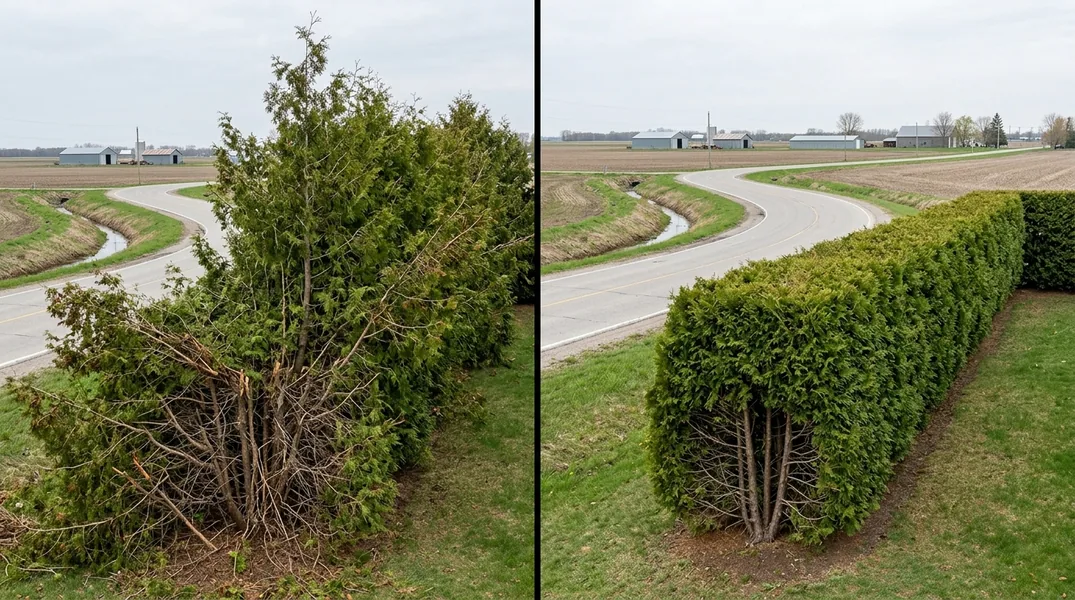
Once established, native Carolinian trees require periodic maintenance to remain healthy and safe. Regular Tree Trimming removes dead, diseased or crossing branches, improves light penetration and reduces wind resistance. For large trees such as mature tulip trees or sycamores, professional pruning is strongly recommended, as improper cuts can create entry points for decay and insect colonization. Crown thinning, which removes a proportion of interior branches while maintaining the overall form, is often preferable to topping or severe heading, which disfigures the tree and promotes vigorous but weakly attached regrowth.
Storm damage is an occasional reality in Ontario, and large trees near houses, driveways or power lines may require assessment and remedial work after severe weather. 24/7 Emergency Tree Removal services are essential if a tree is partially uprooted, has major limbs hanging over structures, or poses an immediate hazard. Our crews at Rose City Tree Trimming are equipped to handle these situations safely and efficiently, and we document damage for your insurance claim.
Disease and pest management are also part of long-term stewardship. While native trees are generally more resistant to local pests than exotic species, they can still be affected by insects, fungi or environmental stress. Regular inspection by a certified arborist can catch problems early, when intervention is most effective and least costly. If Tree Removal becomes necessary, whether due to disease, age or hazard, professional removal ensures safe dismantling and proper disposal of wood and debris.
Getting Started with Carolinian Trees in Windsor
The opportunity to grow Carolinian species is one of the unique advantages of living in the Windsor area. Whether you are establishing a new landscape, restoring a woodland, or simply adding a specimen tree to your property, the first step is understanding your site and choosing species that will thrive there for decades to come. Native trees are not only beautiful and ecologically valuable, they are also more resilient to local pests, diseases and climate fluctuations than exotic alternatives.
Rose City Tree Trimming has deep experience with native species selection, planting, establishment and long-term management throughout the Windsor area and surrounding municipalities. Our certified arborists can assess your property, recommend suitable species, oversee planting, and provide the ongoing care that ensures your trees reach their full potential. Whether you need help with site preparation, young tree pruning, mature tree maintenance or emergency response, we are here to help. Contact us today at (855) 510-1827 for a free estimate, or visit our website at https://windsor-tree-trimming.ca to learn more about our services and pricing.
Looking for a professional in Windsor? Rose City Tree Trimming responds quickly for all your tree trimming needs.
Get a free estimateOur services : Tree Removal · Tree Trimming · Tree Pruning