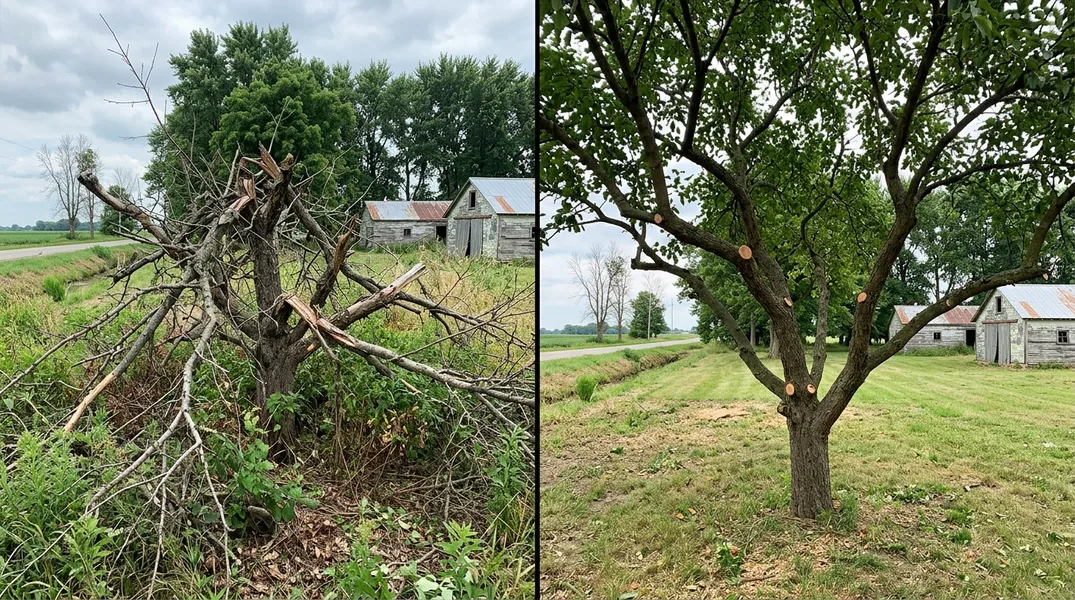
Why Windsor Trees Face Seasonal Stress
Trees in Windsor experience two distinct seasonal challenges that put them under considerable strain. Summer thunderstorms arrive with little warning, bringing high winds, heavy rainfall, and lightning strikes that can snap branches or topple entire trees. Winter ice storms present a different but equally serious threat, as accumulated ice on branches adds weight that weak or poorly maintained limbs cannot support. Both conditions lead to the same outcome: property damage, personal injury, and costly emergency repairs.
The difference between a tree that survives a storm and one that fails often comes down to preparation. Trees with weak branch attachments, included bark, or structural defects are far more likely to shed limbs or fall during severe weather. A silver maple with a split trunk, for example, is already compromised and becomes a serious hazard when wind speeds increase or ice load accumulates. By taking action now, before the season arrives, you reduce the risk that your trees will become a liability to your home and family.
Understanding Storm Damage and Ice Storm Branch Failure
Storm damage in Windsor follows predictable patterns. Heavy winds target the tallest trees and the longest branches, especially those that extend over roofs or driveways. A single falling branch can pierce a roof, damage gutters, or worse, strike a vehicle or person below. Ice storms are particularly treacherous because the damage is not always visible until the weight becomes too great. A branch that looks healthy in autumn may be under internal stress, and when ice accumulates, it fails suddenly without warning.
The mechanics of branch failure during ice storms differ from wind damage. Ice adds significant weight, sometimes doubling or tripling the load on a limb. Branches with poor angles of attachment, those that are too long relative to their diameter, or those that were topped or incorrectly pruned years ago are first to fail. Once ice begins to fall from a broken branch, it creates a cascade of damage to the tree below and to anything underneath. Understanding these failure patterns helps explain why preventive action is so important.
Preventive Pruning Before Storm Season
Tree Pruning done in late spring or early summer is one of the most effective ways to reduce storm risk. Preventive pruning removes dead wood, eliminates branches with weak crotches, and reduces the wind load on the crown. It also improves air circulation through the canopy, which helps the tree shed water and ice more effectively. A certified arborist evaluates each branch and removes only what is necessary, preserving the tree's structure and natural form.
The timing of preventive pruning matters. In the Windsor area, late spring through early summer is ideal because the tree is actively growing and can compartmentalize wounds quickly. Pruning in late summer or autumn is less effective and can stress the tree heading into winter. A professional arborist knows which branches to remove and which to keep, ensuring that the tree remains healthy and attractive while being better able to withstand severe weather. Regular pruning every three to five years keeps trees in optimal condition year-round.
Hazard Tree Assessment and Risk Evaluation
Not every tree that looks large is dangerous, and not every small tree is safe. A proper hazard tree assessment considers the tree's species, age, health, location relative to structures and property lines, and the likelihood that it will fail. A silver maple with a split trunk is an obvious concern, but a seemingly healthy oak with internal rot or a birch with a codominant stem may pose equal risk. Only a trained professional can identify these hidden defects through visual inspection and, when necessary, specialized testing.
Rose City Tree Trimming recommends a hazard tree assessment for any tree that is large, close to your home, or showing signs of decline. The assessment results guide decisions about whether the tree should be removed, pruned to reduce risk, or monitored over time. If a tree is deemed hazardous, our team can discuss your options and provide a transparent estimate. In Essex County and the surrounding area, municipal regulations may require an arborist report before you can remove a tree, and a professional assessment serves that purpose as well. Contact us at (855) 510-1827 to schedule an assessment and receive a free estimate.
Emergency Tree Removal When Damage Occurs
Despite the best prevention, severe weather sometimes causes damage. A tree falling on a house in Windsor is a situation that demands immediate action. Fallen trees can compromise the structural integrity of your home, block driveways, damage vehicles, and create safety hazards for your family and neighbours. 24/7 Emergency Tree Removal services are essential in these situations. Rose City Tree Trimming responds to emergency calls around the clock, dispatching crews to assess damage, remove hazards, and begin cleanup as soon as possible.
Emergency removal is different from routine Tree Removal. The tree is already down or at immediate risk of falling, and the priority is safety and damage control, not aesthetics. Our crews work quickly to remove the fallen tree, clear debris from structures, and restore safe access to your property. We also document the damage thoroughly, which is important for insurance claims. If you experience storm damage, call (855) 510-1827 immediately. We are available 24 hours a day to help.
Preparing Your Property for Winter Ice and Summer Storms
Comprehensive preparation involves more than just pruning. Inspect trees regularly for signs of disease, pest damage, or structural defects. Remove dead branches as soon as you notice them, and avoid planting new trees too close to your home or power lines. Maintain clear sightlines from your house so you can monitor tree health throughout the year. If you have a silver maple or other species prone to splitting, consider cabling and bracing as an alternative to removal, especially if the tree has sentimental or aesthetic value.
Work with a certified arborist to develop a long-term tree care plan tailored to your property. This plan should identify which trees need pruning, which should be monitored, and which pose enough risk to warrant removal. Regular maintenance reduces emergency costs and helps you avoid the stress and expense of dealing with a severe thunderstorm tree damage Ontario situation. Rose City Tree Trimming serves Windsor and the surrounding area with a full range of services designed to keep your trees healthy and your property safe. Contact us today at (855) 510-1827 for a free consultation and estimate.
Looking for a professional in Windsor? Rose City Tree Trimming responds quickly for all your tree trimming needs.
Get a free estimateOur services : Tree Removal · Tree Trimming · Tree Pruning